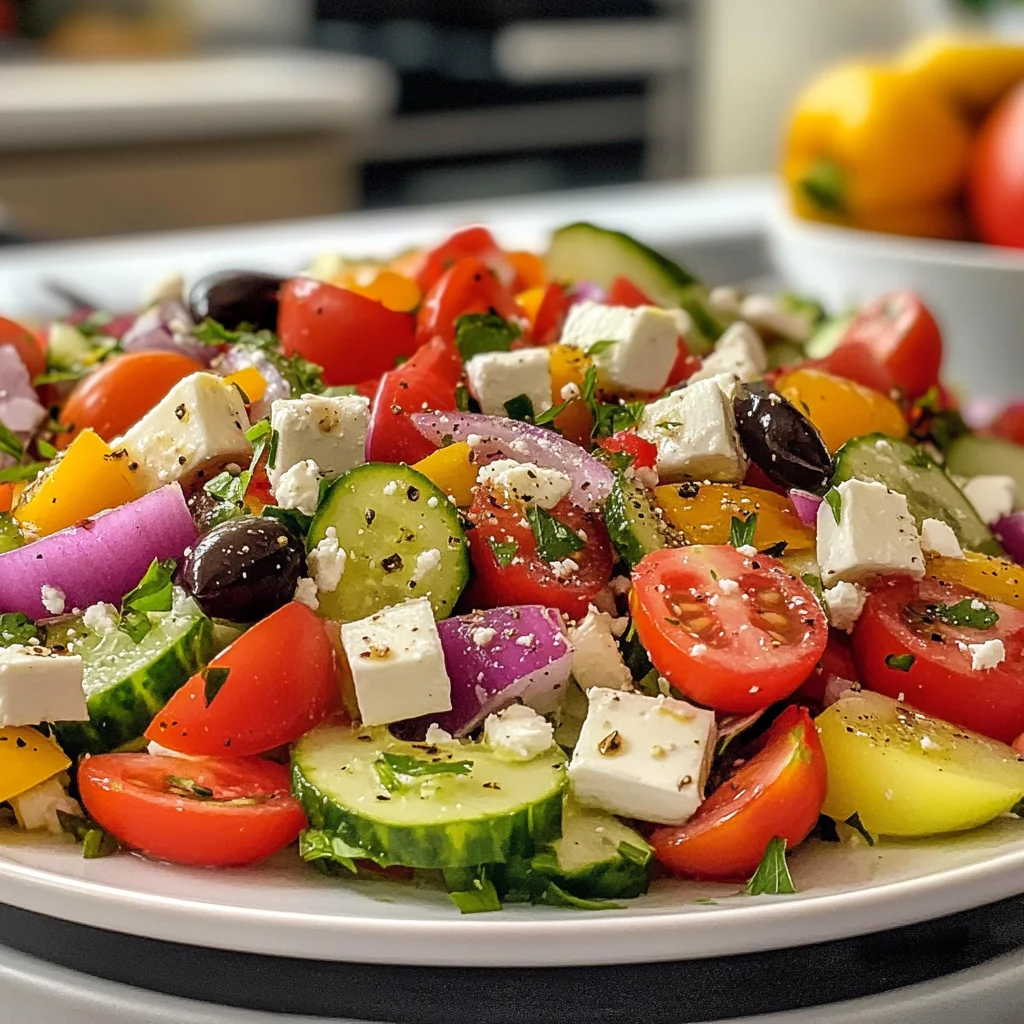
Picture a vibrant bowl of Greek salad, bursting with the crispness of sun-ripened cucumbers, juicy tomatoes dancing with bright green bell peppers, and the rich creaminess of feta cheese that crumbles like dreams on your fork. The tantalizing aroma of olive oil mingling with zesty lemon juice creates an irresistible allure that beckons you to dive in. Each bite is a refreshing symphony that transports you to a sun-soaked terrace overlooking the Aegean Sea, making it the perfect companion for lazy summer afternoons or lively family gatherings.
As I recall my first encounter with this colorful dish at a bustling taverna in Greece, laughter and joy filled the air, each bite evoking memories of warmth and togetherness. Ideal for picnics or light dinners, Greek salad not only delights your palate but also nourishes your body with nature’s finest ingredients. Prepare to embark on a flavor journey that will leave you craving more, as this delightful medley promises to elevate any meal into a celebration!
Why Is greek salad So Irresistibly Good?
Freshness shines through each bite with vibrant cherry tomatoes and crisp cucumber, making it a perfect summer dish. Creamy feta adds a delightful tang that pairs beautifully with the briny kalamata olives. Quick to prepare, this salad comes together in just 15 minutes, ensuring you spend less time in the kitchen and more time enjoying delicious meals. Versatile enough to serve as a side or main dish, it’s sure to impress at gatherings!
greek salad Ingredients
For the Vegetables
- 2 cups cherry tomatoes (halved) – These sweet, juicy tomatoes add a burst of color and flavor to your greek salad.
- 1 cucumber (diced) – Crisp and refreshing, cucumbers provide a delightful crunch in every bite.
- 1 cup red onion (thinly sliced) – The sharpness of red onion balances the other flavors beautifully.
- 1 cup bell pepper (diced) – Colorful bell peppers contribute sweetness and vibrant hues to your salad.
For the Cheese and Olives
- 1 cup feta cheese (crumbled) – Creamy feta brings a tangy richness that elevates the salad’s taste profile.
- 1/2 cup kalamata olives (pitted and halved) – Briny kalamata olives give an authentic Mediterranean essence to your greek salad.
For the Dressing
- 1/4 cup olive oil – A high-quality olive oil enhances the overall flavor and adds healthy fats.
- 2 tablespoons lemon juice (freshly squeezed) – Fresh lemon juice brightens up the salad with its zesty acidity.
- 1 teaspoon oregano (dried) – Dried oregano lends a classic Mediterranean aroma that’s essential for a true greek salad.
- to taste salt – A little salt helps to bring out all the ingredients’ natural flavors.
- to taste black pepper – Freshly ground black pepper adds just the right amount of spice to your dressing.
Step-by-Step greek salad
1. Combine Vegetables: In a large mixing bowl, combine the vibrant 2 cups of halved cherry tomatoes, diced cucumber, thinly sliced red onion, and diced bell pepper for that fresh crunch.
2. Add Cheese and Olives: Gently fold in 1 cup of crumbled feta cheese and 1/2 cup of pitted and halved kalamata olives to the colorful mix, adding a rich creaminess and briny flavor.
3. Make the Dressing: In a small bowl, whisk together 1/4 cup of olive oil, 2 tablespoons of freshly squeezed lemon juice, 1 teaspoon of dried oregano, salt, and black pepper until well blended for a zesty finish.
4. Combine and Serve: Pour the dressing over your beautiful salad mixture and toss gently to coat everything evenly. Serve immediately for the freshest taste!
Optional: Garnish with extra feta or a sprinkle of fresh herbs for added flair.
Exact quantities are listed in the recipe card below.
Tips for the Best greek salad
- Fresh Ingredients: Use ripe cherry tomatoes and crisp cucumbers for the best flavor and texture in your greek salad.
- Perfectly Cut Onion: Thinly slice the red onion to avoid overpowering the salad; soaking it in cold water for a few minutes can reduce its sharpness.
- Quality Feta Cheese: Opt for high-quality feta cheese for a creamier texture; crumbling it just before serving enhances the flavor.
- Olive Variety: Choose kalamata olives for their rich taste; make sure to pit them properly to prevent any unpleasant surprises in your salad.
- Dressing Ratio: Balance your olive oil and lemon juice; too much oil can weigh down the greek salad, while too little may leave it bland.
- Timing Matters: Toss the dressing with the salad just before serving to keep everything fresh and vibrant.
How to Store and Freeze greek salad
Fridge: Keep your greek salad in an airtight container for up to 3 days. This helps maintain the freshness of the vegetables and prevents sogginess.
Dressing Storage: Store the dressing separately in a small jar in the fridge for up to 1 week. Shake well before adding it to your salad.
Freezer: Freezing is not recommended for greek salad due to the high water content in fresh vegetables, which can become mushy upon thawing.
Serving Tip: If you have leftovers, consider removing excess moisture from the tomatoes and cucumbers before storing to keep your salad crisp!
greek salad Your Way
Feel free to get creative and make this vibrant dish your own with these tasty variations!
- Herbed Twist: Add fresh herbs like parsley or dill for a burst of flavor. These herbs enhance the freshness, making each bite even more delightful.
- Spicy Kick: Incorporate sliced jalapeños or a pinch of red pepper flakes to elevate the heat. This addition brings a zesty surprise that pairs beautifully with the cool veggies.
- Creamy Alternative: Swap feta with creamy goat cheese for a tangy twist. The smooth texture of goat cheese adds richness while still keeping it light.
- Crunchy Texture: Toss in some roasted chickpeas for an added crunch. They not only provide texture but also pack in extra protein for a filling meal.
- Fruit Fusion: Mix in diced avocado or sweet mango for a tropical flair. The sweetness complements the savory elements, creating a refreshing balance.
- Nutty Addition: Sprinkle chopped walnuts or almonds on top for added crunch and healthy fats. Their nutty flavor enhances the overall taste while providing a satisfying bite.
- Seasonal Vegetables: Substitute any seasonal veggies like zucchini or asparagus based on what’s fresh. Embracing seasonal produce keeps your salad exciting and vibrant throughout the year.
Make Ahead Options
This Greek salad is not only a vibrant burst of flavor but also a fantastic option for meal prep. To save time during busy weekdays, you can chop the vegetables—2 cups of halved cherry tomatoes, 1 diced cucumber, 1 cup of thinly sliced red onion, and 1 cup of diced bell pepper—up to 24 hours in advance. Additionally, you can crumble the 1 cup of feta cheese and halve the ½ cup of kalamata olives ahead of time, storing them separately in airtight containers in the refrigerator. For the dressing, whisk together the ¼ cup olive oil, 2 tablespoons freshly squeezed lemon juice, 1 teaspoon dried oregano, salt, and black pepper, and keep it in a jar for up to 3 days. When it’s time to serve your Greek salad, simply combine everything in a large bowl and toss with the dressing for a fresh and flavorful meal that tastes just as great as when you first made it!
greek salad Recipe FAQs
What kind of tomatoes work best for a greek salad?
Cherry tomatoes are perfect for a Greek salad as they add a burst of sweetness and color! If you can’t find cherry tomatoes, you can use diced Roma or vine-ripened tomatoes instead. Just make sure to remove excess seeds to keep the salad from getting too watery.
How should I store leftover greek salad?
To keep your Greek salad fresh, store it in an airtight container in the refrigerator. It’s best enjoyed within 1-2 days. Just remember, if you’ve dressed the salad, the vegetables may become soggy over time, so consider storing the dressing separately if you plan on saving leftovers.
Can I freeze greek salad?
Freezing is not recommended for Greek salad due to the high water content in ingredients like cucumbers and tomatoes. However, if you want to prepare components in advance, you can freeze feta cheese and olives separately. Just thaw them before adding to your fresh veggies!
How do I adjust the serving size for my family?
This Greek salad recipe serves 4 and is easily scalable! Simply multiply each ingredient by the number of servings you need. For example, if you’re cooking for 8, just double everything—easy peasy!
What dietary considerations should I be aware of with this recipe?
This Greek salad is naturally vegetarian and can be made gluten-free by ensuring your feta cheese is labeled as such. If you’re looking for a vegan option, substitute feta with a plant-based cheese alternative or simply omit it altogether while adding extra olives or avocados for creaminess.
What should I do if my dressing is too oily?
If your dressing turns out too oily, don’t worry! You can balance it out by adding more lemon juice or even a splash of vinegar. A pinch of salt can also enhance flavors without overwhelming the dressing; just whisk it well until everything is combined nicely again!
Greek Salad
Ingredients
Method
- In a large mixing bowl, combine the cherry tomatoes, cucumber, red onion, and bell pepper.
- Add the crumbled feta cheese and kalamata olives to the bowl with the vegetables.
- In a small bowl, whisk together the olive oil, lemon juice, oregano, salt, and black pepper.
- Pour the dressing over the salad and toss gently to combine. Serve immediately.