Picture this: a warm, golden crust that crumbles just right, revealing a luscious filling bursting with vibrant flavors that dance on your taste buds. The aroma wafting through the air is enough to make even the most dedicated dieter weak in the knees, promising an unforgettable culinary experience that will transport you straight to food paradise.
I still remember the first time I savored this delightful dish at a family gathering, where laughter mingled with the irresistible scent of spices in the air. Whether it’s a cozy Sunday dinner or a festive celebration, this recipe is sure to steal the show and leave you eagerly anticipating every single bite.
Why is Ciabatta Bread a Must-Try?
Imagine the aroma of freshly baked bread wafting through your kitchen!
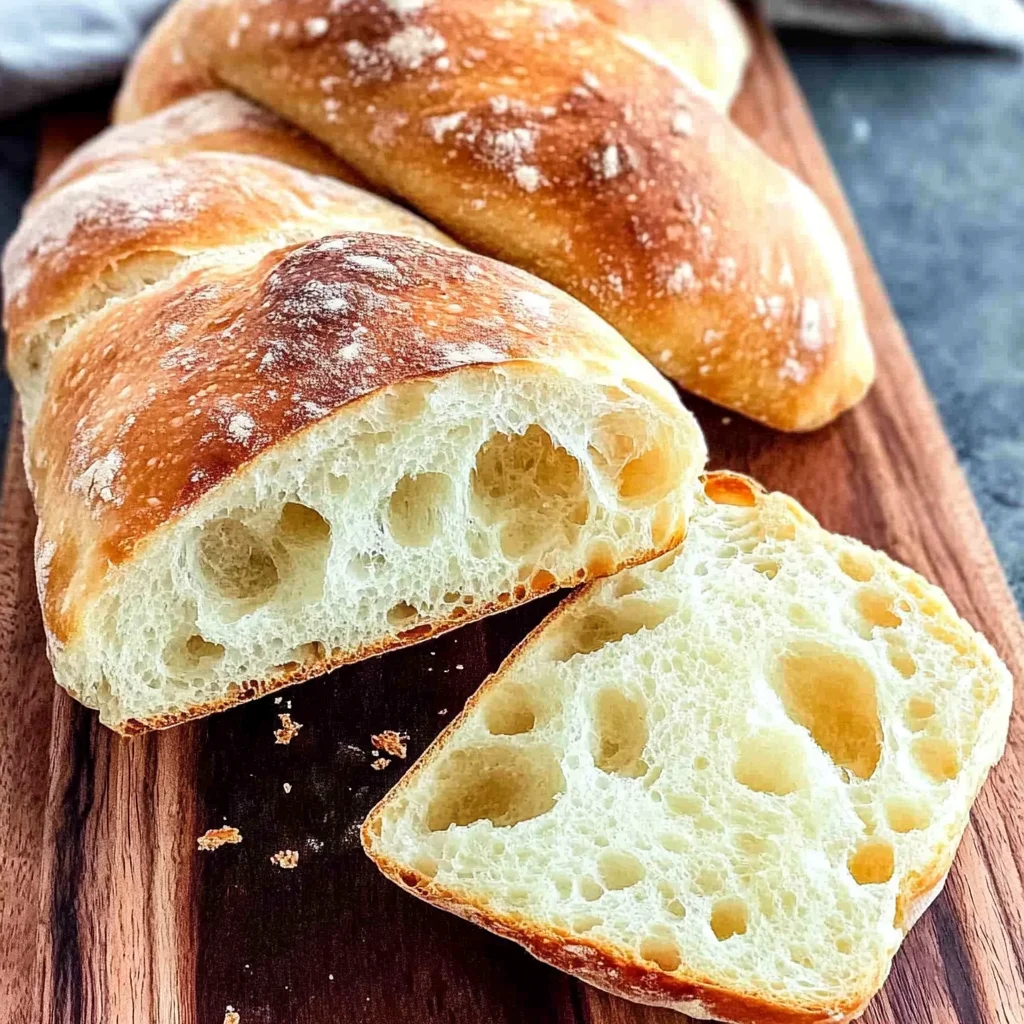
This ciabatta bread recipe is not only easy, but it also yields a crusty exterior and a soft, airy interior that’s simply irresistible.
Versatile enough to pair with any meal, it’s perfect for sandwiches or as a side to soups.
Time-saving, you can prepare the dough in advance and bake it fresh when needed.
Guaranteed to impress friends and family, this crowd-pleaser will elevate any dining experience!
Ciabatta Bread Ingredients
For the Dough
- Bread flour – This high-protein flour gives ciabatta its signature chewy texture.
- Water – Use warm water to help activate the yeast effectively.
- Instant yeast – A quick-rising option that makes the dough process faster.
- Salt – Enhances the flavor and strengthens the dough structure.
For the Topping
- Olive oil – Drizzle on top for a rich flavor and golden crust finish.
- Flour – Dust your work surface to prevent sticking while shaping the ciabatta bread.
Enjoy making this delightful ciabatta bread, perfect for sandwiches or simply dipped in olive oil!
How to Make Ciabatta Bread
1. Mix the Ingredients: Begin by combining 4 cups of all-purpose flour, 1 ½ cups of warm water, and 2 teaspoons of salt in a large mixing bowl. Stir until you have a sticky dough.
2. Knead the Dough: Dust your countertop lightly with flour and knead the dough for about 10 minutes. It should become smooth and elastic, though still slightly tacky.
3. First Rise: Transfer the dough to a greased bowl, cover it with plastic wrap, and let it rise in a warm place for about 1-2 hours or until doubled in size.
4. Shape the Loaves: Once risen, gently deflate the dough on a floured surface. Divide it into two equal pieces and shape each into a rustic loaf. Be gentle to retain those lovely air pockets!
5. Second Rise: Place the loaves on a floured baking sheet, cover them with a kitchen towel, and allow them to rise for another hour until they puff up beautifully.
6. Preheat the Oven: About 20 minutes before baking, preheat your oven to 450°F (230°C). A hot oven is key to achieving that coveted crust!
7. Bake the Bread: Bake the ciabatta for approximately 25-30 minutes until golden brown and hollow-sounding when tapped on the bottom.
8. Cool Down: Allow your fresh ciabatta bread to cool on a wire rack for at least 30 minutes before slicing—this helps set the texture perfectly.
Optional: Brush with olive oil for added flavor before serving.
Exact quantities are listed in the recipe card below.
Expert Tips for Perfect Ciabatta Bread
- Hydration Is Key: Ensure your dough is wet and sticky; a high hydration level is fundamental for achieving that signature ciabatta texture.
- Knead with Care: Avoid over-kneading your dough. Instead, use the stretch-and-fold method to develop gluten without making it tough.
- Rest Time Matters: Allow your ciabatta bread to rest adequately during the first rise. This step enhances flavor and makes handling easier.
- Shape Gently: When shaping, be gentle to preserve air bubbles. This light touch ensures your ciabatta bread has an airy crumb structure.
- Preheat Properly: Always preheat your oven with a baking stone or steel inside. This creates the perfect environment for a crispy crust on your ciabatta.
How to Store and Freeze Ciabatta Bread
- Room Temperature: Keep ciabatta bread wrapped in a clean kitchen towel or paper bag for up to 3 days. This helps maintain its crusty exterior and soft interior.
- Freezer: For longer storage, slice ciabatta bread and wrap it tightly in plastic wrap, then place it in an airtight container. It will last up to 3 months without losing flavor.
- Reheating: To revive frozen ciabatta, remove it from the freezer and let it thaw at room temperature for about 30 minutes. Then, bake at 375°F (190°C) for 10-15 minutes for a fresh taste.
- Fridge: Avoid storing ciabatta bread in the refrigerator, as this can lead to staleness. Instead, opt for room temperature or freezing for the best results.
Ciabatta Bread Variations You’ll Love
Feel free to let your creativity shine and customize this delightful loaf to suit your taste buds.
- Whole Wheat: Substitute half the all-purpose flour with whole wheat for a nuttier flavor and added fiber. This variation not only enhances the nutritional profile but also gives your ciabatta a lovely, rustic texture.
- Herbed Delight: Add fresh herbs like rosemary or thyme into the dough for an aromatic twist. Just a handful will transform your bread into a fragrant masterpiece, perfect for pairing with olive oil.
- Olive Oil Twist: Replace some water with high-quality extra virgin olive oil for richness. This not only enriches the flavor but also adds a delightful moistness that makes every bite irresistible.
- Cheesy Goodness: Fold in shredded cheese like Parmesan or mozzarella before baking for a cheesy surprise. The melted pockets of cheese create bursts of flavor, making each slice an indulgent treat.
- Spicy Kick: Mix in crushed red pepper flakes or finely chopped jalapeños for a touch of heat. This fiery addition elevates your ciabatta to new levels, ideal for those who love to spice things up!
- Seeded Crust: Top the loaf with sesame or poppy seeds before baking for added crunch. This simple sprinkle not only enhances texture but also creates an eye-catching finish that invites everyone to take a bite.
- Sweet Twist: Incorporate dried fruits like cranberries or apricots into the dough for a subtly sweet variation. This unexpected sweetness pairs beautifully with savory dishes, creating a delightful balance at your table.
- Gluten-Free Option: Use a gluten-free flour blend to cater to dietary needs without compromising on taste. While it may require slight adjustments, you’ll still achieve that beloved ciabatta texture everyone adores!
Make Ahead Options
Preparing ciabatta bread ahead of time is a fantastic way to save on meal prep while still enjoying that homemade goodness. You can mix the dough and let it rise in the fridge for up to 24 hours, allowing the flavors to develop beautifully. Alternatively, if you prefer to bake later in the week, shape your loaves and freeze them for up to 3 days; just remember to wrap them tightly in plastic wrap to maintain freshness. When you’re ready to finish baking, simply let the frozen loaves thaw at room temperature for about 1 hour before placing them in a preheated oven. This method ensures you’ll have warm, crusty ciabatta bread ready whenever you need it, making your meals even more delightful.
Ciabatta Bread Recipe FAQs
What type of flour should I use for ciabatta bread?
For the best results, opt for bread flour, which has a higher protein content. This helps create that beautiful chewy texture and airy crumb we all love in ciabatta. If you’re in a pinch, all-purpose flour can work too, but your bread may be slightly denser.
How long can I store homemade ciabatta bread?
Homemade ciabatta can be stored at room temperature for up to 2 days in a paper bag to retain its crusty exterior. For longer storage, wrap it tightly in plastic wrap and keep it in the freezer for up to 3 months. Just remember to let it thaw at room temperature before reheating!
Can I freeze ciabatta bread?
Absolutely! To freeze ciabatta, let it cool completely after baking. Wrap it tightly in plastic wrap and then place it in a freezer-safe bag. When you’re ready to enjoy it again, leave it out on the counter for a few hours or pop it directly into the oven at 350°F (175°C) for about 10-15 minutes to regain that fresh-out-of-the-oven flavor.
Why is my ciabatta bread flat or dense?
A flat or dense loaf can often be traced back to underproofing or overproofing the dough. Ensure that you allow your dough enough time to rise—look for it to double in size, which usually takes about 1-2 hours depending on room temperature. Additionally, make sure not to add too much flour while shaping; you want that sticky texture!
Is ciabatta bread suitable for a gluten-free diet?
Traditional ciabatta is made with wheat flour and is not gluten-free. However, you can experiment with gluten-free all-purpose flour blends designed for baking, but keep in mind that the texture will differ. It’s always fun to explore alternatives like almond or oat flour if you’re looking for something unique!
What’s the ideal baking temperature for ciabatta bread?
To achieve that perfect crust and airy interior, preheat your oven to 450°F (232°C). Adding a pan of water on the bottom rack during baking creates steam, which is crucial for developing that delightful crust we adore in ciabatta. Bake until golden brown—about 20-30 minutes—and let your kitchen fill with that irresistible aroma!